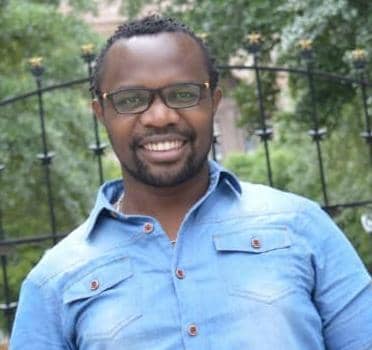
John Businge
Assistant Professor, Computer Science
University of Nevada, Las Vegas
Office: 4245 Science and Engineering Building (SEB)
Telephone (Office): (702)-895-4216
Email: john.businge@unlv.edu
About Me

I am an Assistant Professor in the Department of Computer Science at the University of Nevada, Las Vegas (UNLV), where I lead the Software Evolution (EVOL) Lab.
My research is in software engineering, with a focus on software evolution, software integration, empirical software engineering, and AI-assisted software engineering. My group studies how software systems evolve and develops methods, techniques, and research tools that help developers understand, adapt, integrate, and validate software changes. We also investigate how intelligent software engineering tools can help developers work more effectively and dependably with large language models and coding agents.
My research has been supported by the National Science Foundation (NSF), including an NSF CAREER Award and an NSF Improving Undergraduate STEM Education (IUSE:EDU) Award, as well as by the NASA Nevada Space Grant Consortium.
Before joining UNLV, I was a Research Fellow at the University of Antwerp, Belgium, working in the Lab on Reengineering with Prof. Serge Demeyer. I was also a Fulbright Research Scholar at the University of California, Davis, where I worked in the DECAL Lab with Prof. Vladimir Filkov.
I received my Ph.D. in Computer Science from Eindhoven University of Technology in the Netherlands, under the supervision of Prof. Mark van den Brand and Prof. Alexander Serebrenik.
Research
My research focuses on dependable software evolution: understanding how software changes over time and developing methods and tools that help developers manage, reuse, adapt, integrate, and validate changes across evolving software systems.
My current research spans three closely connected directions:
- Software Evolution and Integration — understanding how related software systems evolve and developing techniques for discovering, adapting, validating, and integrating reusable software changes.
- Empirical Software Engineering — mining software repositories and studying real-world development practices to understand software evolution challenges and evaluate new software engineering methods and tools.
- AI-Assisted Software Engineering — studying how developers use generative AI in software engineering and developing intelligent tools and techniques that help developers work more effectively and dependably with large language models and coding agents.
Much of this work is carried out through the Software Evolution (EVOL) Lab, where we build research tools, datasets, and reproducible empirical methods and evaluate them on real-world software systems and with developers.
Selected Research Highlights
NSF CAREER Award
I received an NSF Faculty Early Career Development Program (CAREER) Award for the project CAREER: Advancing Dependable Reusable Change Integration Across Software Variants. The research develops methods for discovering, adapting, validating, and reliably integrating reusable fixes, enhancements, and capabilities across related software systems that evolve independently.
NSF IUSE:EDU Award
I am also part of the NSF IUSE:EDU-funded project Exploring Integration of Generative Artificial Intelligence in Computer Science Education: A Senior Design Pilot. The project investigates the responsible integration of generative AI into undergraduate computer science education.
Funded PhD Position — Fall 2027
I am recruiting a PhD student to join the EVOL Lab beginning in Fall 2027. The position is supported by my NSF CAREER Award and will contribute to research in dependable software evolution and AI-assisted software engineering.
View the funded PhD opportunity →
Selected Publications
A few representative publications from my recent and ongoing research program are listed below. See Google Scholar and the EVOL Lab publications page for the complete list.
-
PatchTrack: A Comprehensive Analysis of ChatGPT’s Influence on Pull Request Outcomes. Daniel Ogenrwot and John Businge. Empirical Software Engineering, 2026.
Paper -
How AI Coding Agents Modify Code: A Large-Scale Study of GitHub Pull Requests. Daniel Ogenrwot and John Businge. Mining Software Repositories (MSR), 2026.
Paper -
Refactoring-Aware Patch Integration Across Structurally Divergent Java Forks. IEEE International Working Conference on Source Code Analysis and Manipulation (SCAM), 2025.
-
PaReco: Patched Clones and Missed Patches among the Divergent Variants of a Software Family. Poedjadevie Ramkisoen, John Businge, Brent Van Bradel, Alexandre Decan, Serge Demeyer, Coen De Roover, and Foutse Khomh. ESEC/FSE, 2022.
-
Reuse and Maintenance Practices among Divergent Forks in Three Software Ecosystems. John Businge, Moses Openja, Sarah Nadi, and Thorsten Berger. Empirical Software Engineering, 2022.
-
Variant Forks — Motivations and Impediments. John Businge, Ahmed Zerouali, Alexandre Decan, Tom Mens, Serge Demeyer, and Coen De Roover. SANER, 2022.
News
| July, 2026 | I received an NSF CAREER Award for the project CAREER: Advancing Dependable Reusable Change Integration Across Software Variants. [NSF Award] |
| May, 2026 | Our paper PatchTrack: A Comprehensive Analysis of ChatGPT's Influence on Pull Request Outcomes was published in Empirical Software Engineering. [Paper] |
| April, 2026 | Our paper How AI Coding Agents Modify Code: A Large-Scale Study of GitHub Pull Requests was published in the MSR 2026 Mining Challenge track. [Paper] |
| September, 2025 | Our paper Refactoring-Aware Patch Integration Across Structurally Divergent Java Forks was published at SCAM 2025. |
| August, 2025 | Our NSF IUSE:EDU project, Exploring Integration of Generative Artificial Intelligence in Computer Science Education: A Senior Design Pilot, was funded. [NSF Award] |
| September, 2024 | Our paper PatchTrack: Analyzing ChatGPT's Impact on Software Patch Decision-Making in Pull Requests was accepted in the ASE 2024 Poster Track. |
| August, 2024 | Our project Integrating AI Technologies into Software Engineering Education received $50,000 from the NASA Nevada Space Grant Consortium. |
| September, 2023 | Our book chapter Analyzing Variant Forks of Software Repositories from Social Coding Platforms was published by Springer. |
| June, 2022 | Our paper PaReco: Patched Clones and Missed Patches among the Divergent Variants of a Software Family was accepted at ESEC/FSE 2022. |
| March, 2022 | Our paper Reuse and Maintenance Practices among Divergent Forks in Three Software Ecosystems was published in Empirical Software Engineering. |
| December, 2021 | Our paper Variant Forks — Motivations and Impediments was accepted at SANER 2022. |